Mankind can still make ‘leaps’
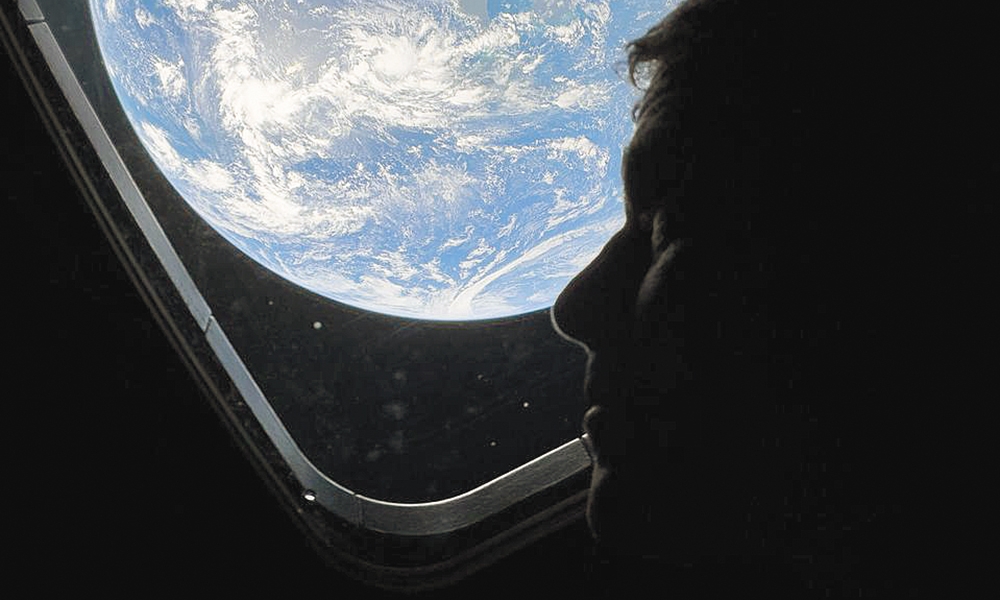
As I’m sitting down and typing this today, the crew of Artemis II is heading back to Earth to complete an historic mission in space.
On April 6, the capsule crew traveled further from our home planet than anyone ever has before.
The crew of Wiseman, Glover, Koch, and Hansen were 252,756 miles from Earth while going around the far side of the Moon, breaking Apollo 13’s Lovell, Haise, and Swigert’s record by more than 4,000 miles.
In addition to that achievement, the crew witnessed and photographed parts of the Moon never before seen by human eyes.
They were also the first crew to leave Earth’s orbit since 1972, when Apollo 17’s Cernan, Evans, and Schmitt made the last manned voyage to our natural satellite until now.
With everything else “going on” elsewhere on Earth, these accomplishments couldn’t have come at a better time.
Our best is always better than our worst
We’ve seen this before.
It’s common now to look at the 1960s as a “turbulent” time.
Amid the protests, tensions, wars, generational disagreements, and risky new forms of expression was the “space race” — albeit partially a result of the “Cold War” between the United States and the Soviet Union.
Near the end of 1968, seen as the most “turbulent” year by many historians and documentarians, humanity saw the Apollo 8 crew of Lovell, Borman, and Anders leave Earth’s orbit and go “around the Moon” for the first time (a similar mission as that of Artemis II, a step toward a manned landing on the lunar surface).
On Christmas Eve 1968, during a live broadcast from their spacecraft, the crew read from Genesis 1:1-10 — the creation narrative — and ended the broadcast with “God bless all of you, all of you on the good Earth.”
It was a welcome moment near the end of a year that saw assassinations, an escalating war in Southeast Asia, protests, and so on, and so on.
The following year, near the end of the 1960s, man walked on the Moon (12 in total eventually would).
Despite all of the damage that one could assess was done in that decade, those who were there still got to witness mankind’s greatest achievement — people working together with all of their intelligence, wisdom, skill, and humility to make a dream come true and expand their horizons beyond their home planet. (I wasn’t there, I don’t feel right saying “we,” “our,” etc.)
On April 6 of this year, prior to being out of communications contact when going around the far side of the Moon, Artemis II crew member Victor Glover shared with NASA and the listening audience, “As we continue to unlock the mysteries of the cosmos, I would like to remind you of one of the most important mysteries there on Earth, and that’s love. Christ said, in response to what was the greatest command, that it was to love God with all that you are, and He also, being a great teacher, said the second is equal to it, and that is to love your neighbor as yourself.”
In spite of everything “bad” that we are dealing with and that we are doing to ourselves, there is always hope, there is always love, and there can always be faith.
To a better future
As the Artemis II crew completes its mission around the moon, near the previous Apollo mission landing sites, and heads back to our spherical home of Planet Earth, itself on its constant journey around the sun, we can continue to grow in faith, hope, and love toward what’s next and what we can all share together.
As future Artemis missions are planned and commenced — and hopefully lead us to walking on the Moon again — we can wait in awe and wonder at what is to come.
Throughout the history of the space program, God has blessed so many people with so many gifts that they have shared with others, not only to travel in space; not only to enjoy memory foam mattresses, cell phones, and wireless headphones; but to dream of a future where we all continue to work together for common goals and accomplish things within ourselves that we didn’t know we had the capability of doing.
As President John F. Kennedy said in 1962 at Rice University in Houston, Texas, the goal of going to the Moon (the top goal at that time) “will serve to organize and measure the best of our energies and skills”.
Yes, we’ve been to the Moon and are trying to go back, but just dream and imagine what’s next.
If we can work our way past the wars, past the divisions, past the conflicts, past the disagreements, and past the lack of love, there are many things we can do.
We owe it to ourselves, and we owe it to all of the young people who are going to be inspired not only by the Artemis astronauts, but also by the staff people in launch control and mission control, the engineers, the scientists, and even the hard-working NASA communications people.
Once again, as Mercury, Gemini, and Apollo did, a generation can be inspired to “do the other things, not because they are easy, but because they are hard.”
What a gift we’ve been given in this Easter season. We’ve been given the best humanity can be with God on our side, watching over everyone during the Artemis mission.
Maybe we don’t get back fully to the Moon for a while, but we have to go somewhere as humanity. Let’s go somewhere good.
Thank you for reading.
I’m praying for you.